
Restoring Sight, Transforming Vision: The Past, Present, and Future of Ophthalmology in Indonesia From institution-based services to an integrated, digital, and equitable national eye-care system

Article Sidebar
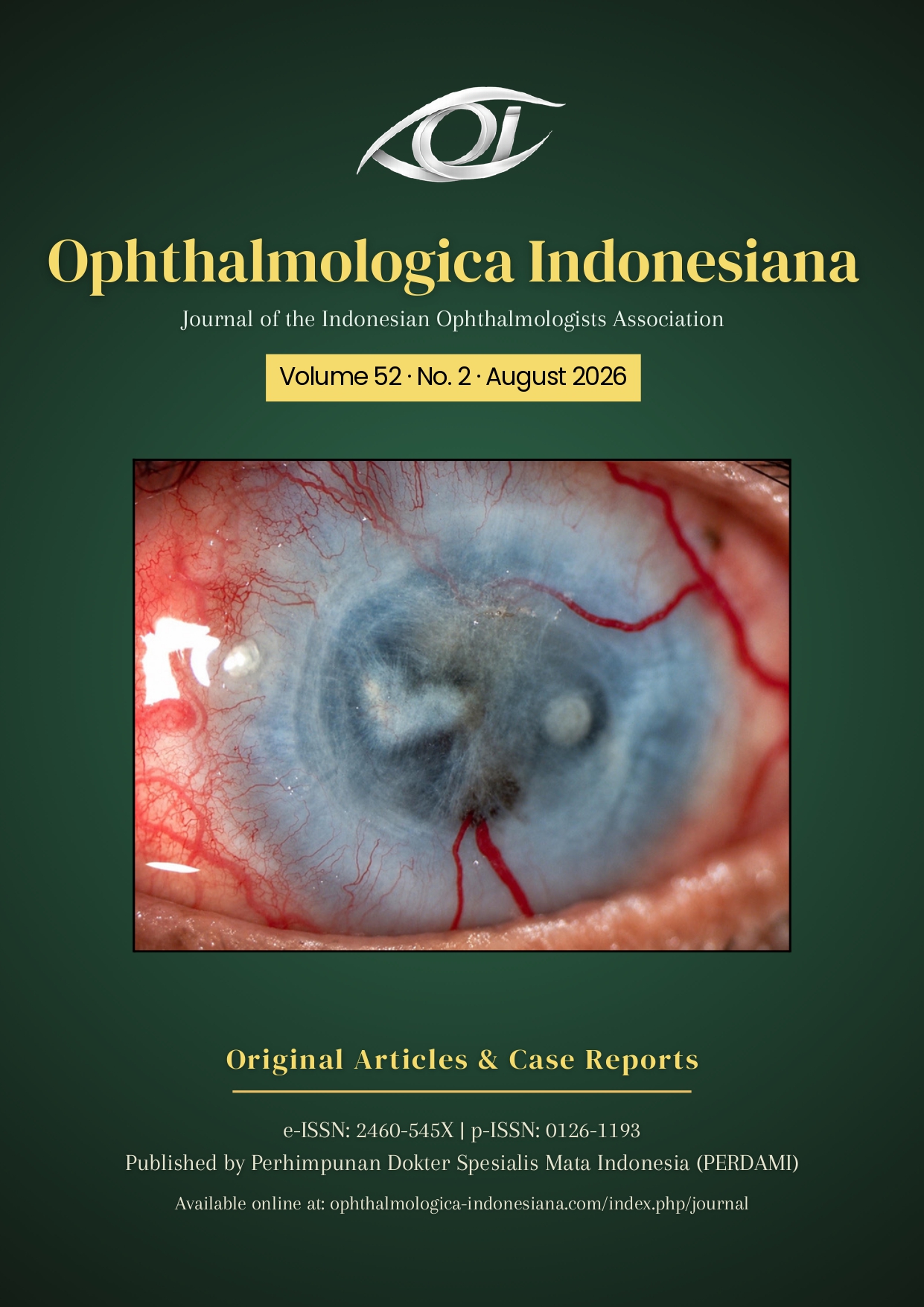
- Restoring Sight, Transforming Vision, Future of Ophthalmology , Indoensia
Abstract
The evolution of ophthalmology in Indonesia reflects substantial clinical progress achieved within a complex and demanding service environment. Across this vast archipelago, diagnostic and therapeutic technologies—including microsurgery, imaging, laser therapy, and pharmacotherapy—have been introduced and widely adopted. Yet these advances have not translated into equitable population benefit. Geographic isolation, the maldistribution of human and financial resources, and fragmented referral pathways continue to restrict access to timely, effective, and high-quality eye care, particularly in underserved communities. The central question is therefore no longer whether Indonesia can acquire modern ophthalmic capabilities, but whether these capabilities can be organised systematically into an accessible, equitable, and accountable national eye-care system.
In 2022, the World Health Organization (WHO) launched its framework for integrated people-centred eye care (IPEC), which places the needs of individuals and communities at the centre of service delivery and promotes a coordinated continuum encompassing health promotion, prevention, diagnosis, treatment, disease management, and rehabilitation across all levels of the health system. Viewed through this lens, the evolution of ophthalmology in Indonesia should be assessed not solely by the adoption of modern technologies and procedures, but by the extent to which it serves a broader public purpose: from hospital-centred treatment to population-centred prevention and integrated care; from episodic charitable outreach to sustainable and equitable coverage; and from expertise concentrated in major cities to connected service networks across provinces. This Perspective traces major milestones in Indonesian ophthalmology, identifies persistent gaps, and proposes priorities for translating clinical and technological progress into equitable and effective population eye care.
Full text article
References
1. Ophthalmology, A.P.A.o. Indonesian Ophthalmologists Association: national society profile. Available from: https://apaophth.org/indonesian-ophthalmologists-association/.
2. Flaxman, S.R., et al., Global causes of blindness and distance vision impairment 1990–2020: a systematic review and meta-analysis. The Lancet Global Health, 2017. 5(12): p. e1221-e1234.
3. Thylefors, B., et al., Global data on blindness. Bulletin of the world health organization, 1995. 73(1): p. 115.
4. Rif’Ati, L., et al., Blindness and visual impairment situation in Indonesia based on rapid assessment of avoidable blindness surveys in 15 provinces. Ophthalmic epidemiology, 2021. 28(5): p. 408-419.
5. Organization, W.H. Indonesia's success in achieving 90 percent coverage and minimizing out-of-pocket expenses through national health insurance expansion. 2024; Available from: https://www.who.int/about/accountability/results/who-results-report-2020-mtr/country-story/2023/indonesia-s-success-in-achieving-90-percent-coverage-and-minimizing-out-of-pocket-expenses-through-national-health-insurance-expansion.
6. Muhit, M., et al., The epidemiology of childhood blindness and severe visual impairment in Indonesia. British Journal of Ophthalmology, 2018. 102(11): p. 1543-1549.
7. Sitompul, R., et al., The burden of ocular diseases in an underdeveloped village in Southwest Sumba, Eastern Indonesia, 2016. Medical Journal of Indonesia, 2017. 26(4): p. 277-85.
8. Bourne, R., et al., Trends in prevalence of blindness and distance and near vision impairment over 30 years: an analysis for the Global Burden of Disease Study. The Lancet global health, 2021. 9(2): p. e130-e143.
9. Sasongko, M.B., et al., Prevalence of diabetic retinopathy and blindness in Indonesian adults with type 2 diabetes. American journal of ophthalmology, 2017. 181: p. 79-87.
10. Sasongko, M.B., et al., Incidence and progression of diabetic retinopathy and blindness in Indonesian adults with type 2 diabetes. Plos one, 2025. 20(8): p. e0322093.
11. Indonesia, K.K.R. Profil Kesehatan Indonesia 2024. 2025.
12. Ruamviboonsuk, P., et al., Artificial intelligence in ophthalmology: evolutions in Asia. Asia-Pacific Journal of Ophthalmology, 2020. 9(2): p. 78-84.
13. Organization, W.H., Eye care in health systems: guide for action. 2022: World Health Organization.
14. Indonesia, K.K.R., Peta Jalan Kesehatan Penglihatan 2025-2030 [Vision Health Roadmap 2025-2030]. 2025.
15. Lestari, Y.D. Vision Health Roadmap Indonesia. 2024.
16. Das, T., et al., Integrated people-centered eye care: the game changer, in South-East Asia Eye Health: Systems, Practices, and Challenges. 2021, Springer. p. 79-90.
17. Organization, W.H., Action plan for integrated people-centred eye care in South-East Asia 2022–2030. 2022.
18. Indonesia, K.K.R. SATUSEHAT: Indonesia's digital health service platform. 2022.
Authors
Copyright (c) 2026 Muhammad Bayu Sasongko

This work is licensed under a Creative Commons Attribution-NonCommercial-ShareAlike 4.0 International License.